ADHD stands for Attention Deficit Hyperactivity Disorder. With ADHD, there are concentration difficulties, impulsivity, and often physical restlessness as well. Both children and adults can be affected.
In the Netherlands, around 3 to 5 percent of children have ADHD. ADHD also occurs in adults, although it is not always recognized right away. Symptoms can show up in different ways and often change with age. While young children mainly stand out due to hyperactive behavior, in teenagers and adults inner restlessness or difficulty with planning and organizing may be more prominent.
The exact cause of ADHD is not clear-cut. Heredity plays a role, but so do environmental factors, sensory processing, nutrition, sleep, stress, and strain on the nervous system. Usually, there is not one single cause, but a combination of factors.
How does ADHD show up in daily life?
ADHD can affect several areas:
difficulty with concentration and focus
being easily distracted
reacting impulsively
difficulty planning and structuring
physical restlessness or fidgeting
becoming frustrated or emotional quickly
problems falling asleep or staying asleep
For children, this can have consequences at school. Sitting still and listening takes a lot of energy, which can put academic performance under pressure. For adults, ADHD may show up as difficulty keeping an overview, finishing tasks, or maintaining boundaries.
It is important to emphasize that ADHD does not only come with limitations. Many people with ADHD are creative, energetic, spontaneous, and think outside the box. The challenge often lies in regulating stimuli and attention.
The role of the nervous system
The nervous system is the body’s central control system. It continuously processes information from the environment as well as from the body itself. Important nerve pathways run through the spine, carrying signals between the brain and the body.
When information processing does not run optimally, this can affect:
attention and concentration
motor control
balance and coordination
emotional regulation
sensory processing
Movement restrictions or functional disturbances in the spine can influence the quality of this signal transmission. This does not mean that ADHD is “caused” by the spine, but it does mean that how the nervous system functions can play a role in how symptoms present.
In some cases, hyperactivity can be seen as an unconscious attempt by the body to create extra stimulation. By moving, the brain tries, in a way, to keep itself awake and active. After all, movement provides additional input to the nervous system.
A broader approach
With ADHD, people often think of medication or behavioral support. This approach can be valuable in many situations. At the same time, some parents or adults choose to additionally look at how the body and nervous system are functioning.
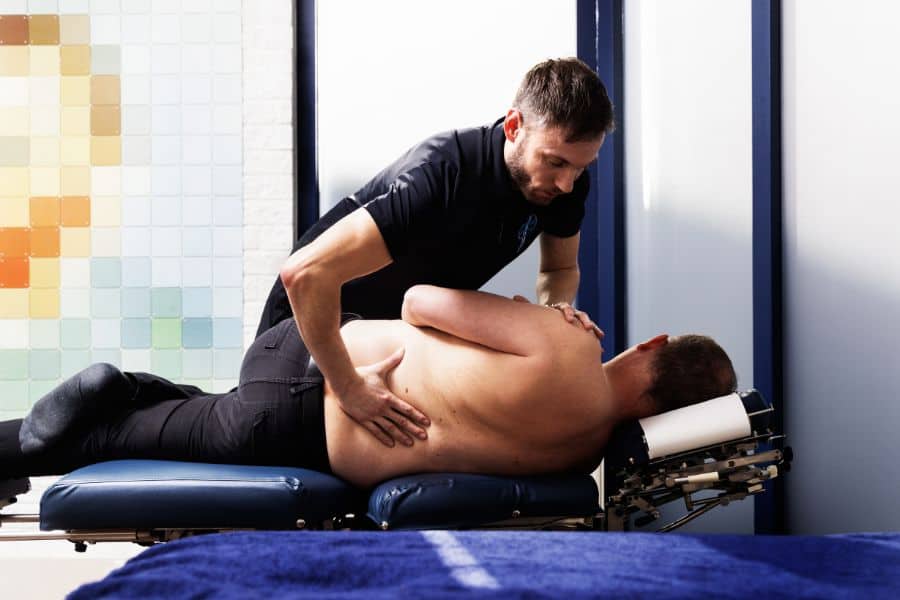
The chiropractic approach focuses on optimizing the cooperation between the spine and the nervous system. By improving movement function, stimuli can be transmitted to the brain better and in a more balanced way.
At Chiropractie Blaauw, we work with a broader approach, using chiropractic care, neurostability therapy, and targeted exercises, among other interventions.
Chiropractic focuses on improving the mobility and function of the spine.
Functional neurology helps the brain regulate activity patterns more effectively.
Exercises support balance, coordination, and body awareness.
The goal is to support overall function, not just suppress symptoms. The individual story is always central. No child or adult with ADHD is the same.
What can you expect?
During an initial appointment, we take an in-depth look at:
the nature and duration of the symptoms
development and medical history
motor skills and balance
posture and movement patterns
possible stress factors
Based on this information, we assess whether chiropractic care could be a suitable addition. Transparency and realistic expectations are important.
ADHD is complex and multifaceted. It affects not only behavior, but also how the nervous system functions and the way the body processes stimuli.
By taking a broader view of how the brain, spine, and body work together, support can sometimes take place on multiple levels. Not as a replacement for other care, but as an addition aimed at balance and optimal development.
Book an appointment or have questions?
Would you like to know what may be possible in your situation, or your child’s, with ADHD?
Feel free to get in touch via the contact form or call 0182 – 570124.