
TREATMENT METHOD
Decompression therapy
For persistent back pain, a herniated disc, or pain that radiates into the legs, decompression therapy may be a suitable treatment option.
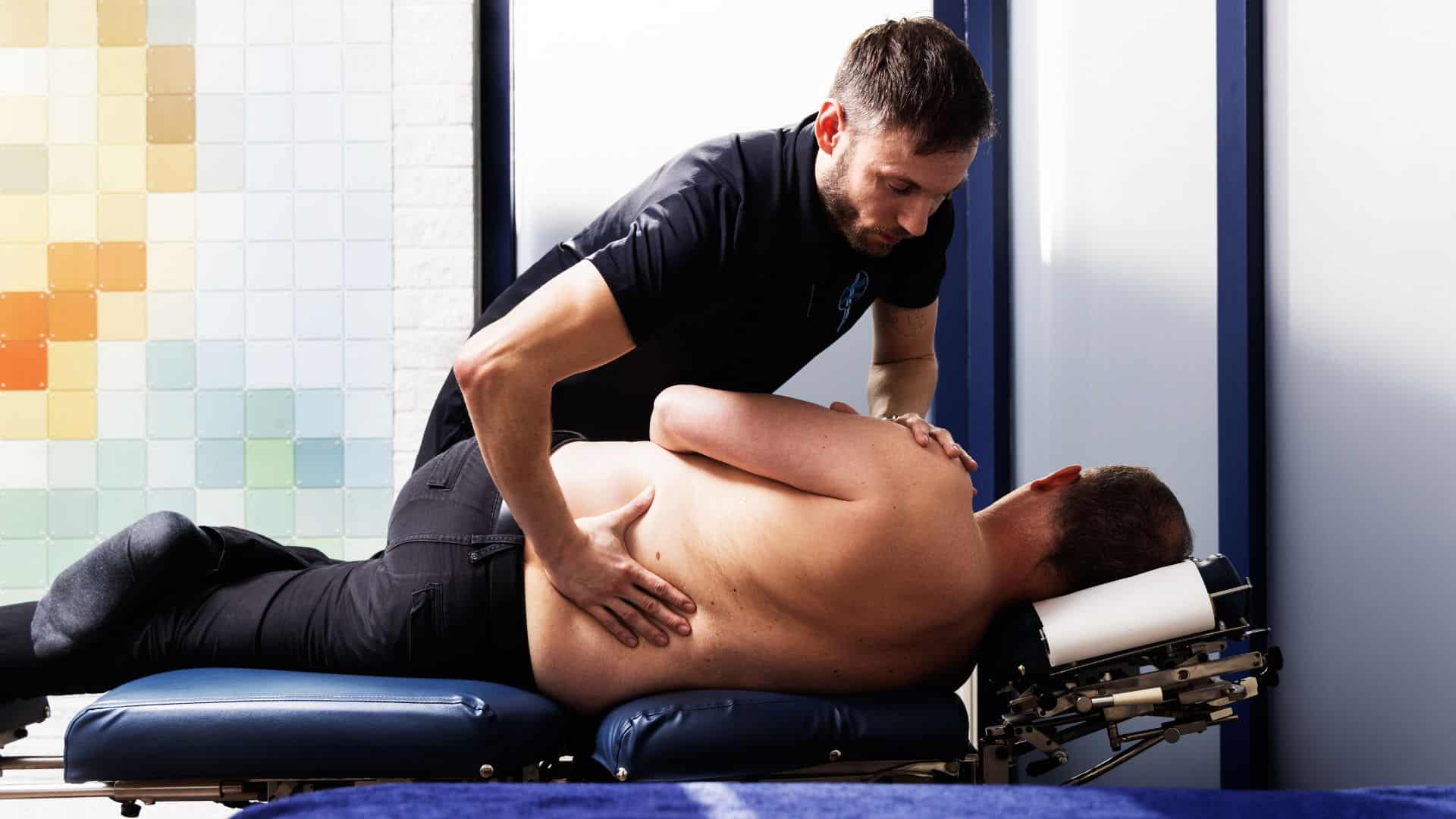

What is decompression therapy?
Decompression therapy is a treatment method in which the spine is relieved in a controlled and measured way. This relief reduces the pressure on the intervertebral discs and nerves.
When an intervertebral disc is under pressure for a prolonged period, it can become deformed. This can cause symptoms such as pain, tingling, numbness, or radiating pain. Decompression therapy aims to reduce this pressure so that surrounding structures can function better.
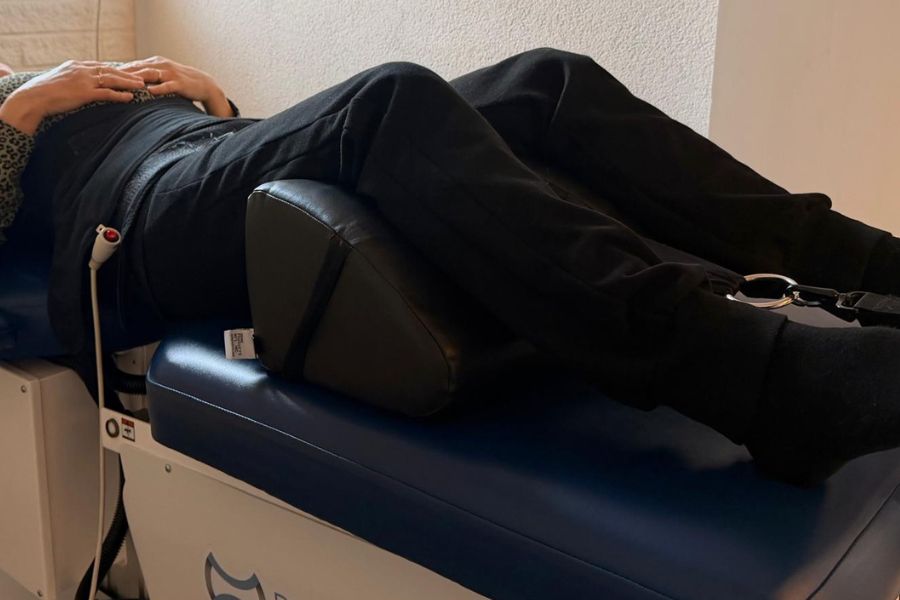
How does decompression therapy work?
Relieving the spine
During decompression therapy, the spine is gently stretched. This temporarily creates more space between the vertebrae. This can help to:
- Reduce pressure on the intervertebral discs
- Lower the load on nerves and nerve roots
- Reduce irritation of nerve tissue
Symptoms such as pain, tingling, or loss of strength may decrease as a result.
Decompression of the back
Back decompression focuses specifically on the area where symptoms originate, such as the lower back in lumbar decompression. With a carefully built-up traction force, it can:
- Reduce pressure in the spine
- Improve blood circulation around the intervertebral disc
- Increase range of motion
This can provide relief for symptoms where nerves have become irritated or pinched.
Would you like to know exactly how this works in your body?
Decompression therapy does more than just create space in the spine. It also affects blood flow, fluid exchange, and the recovery capacity of nerves.
The decompression table
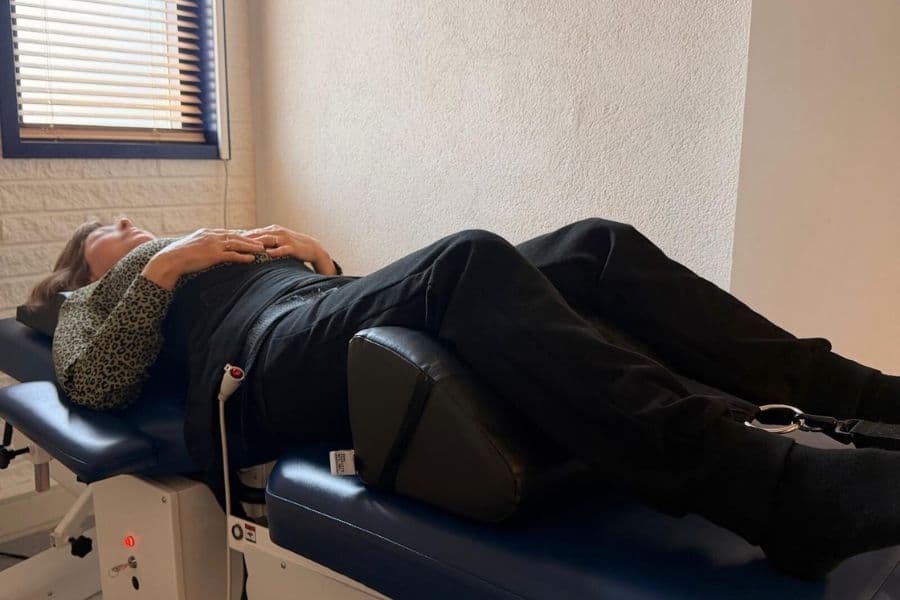
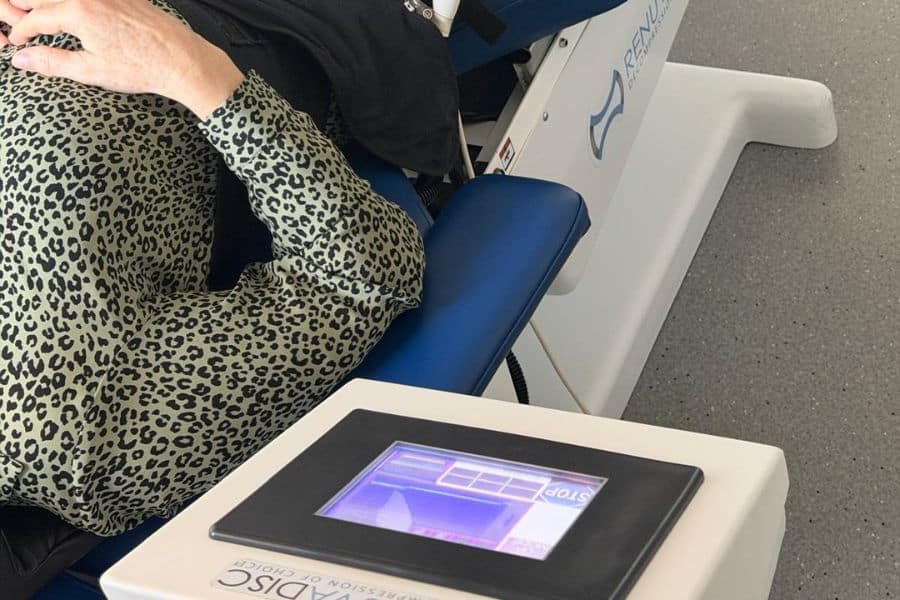
Decompression therapy uses a specially developed decompression table. This treatment table makes it possible to relieve the spine very precisely and in a controlled manner.
The table is fully tailored to body structure, symptoms, and load capacity. During the treatment you lie comfortably and relaxed, while the part of the spine to be treated is addressed in a targeted way.
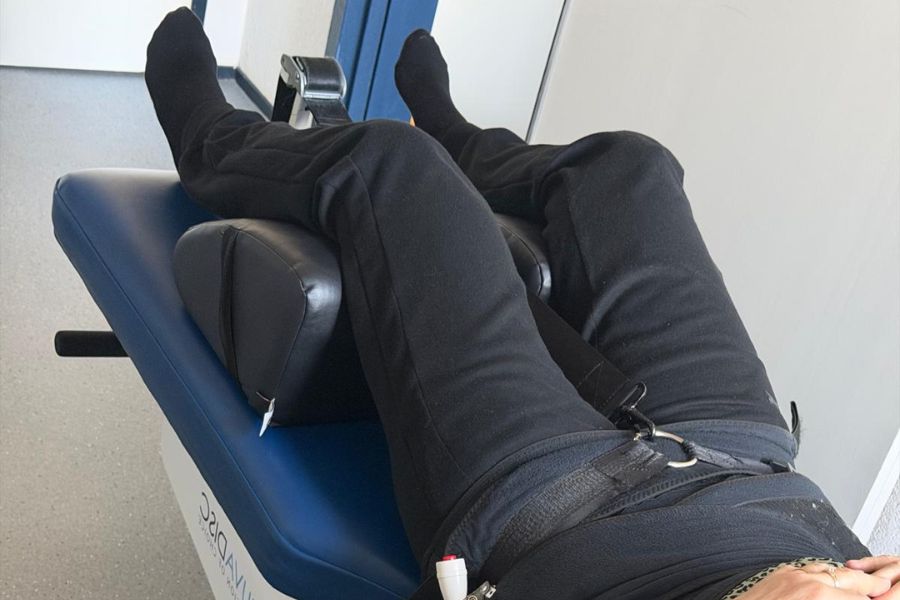
For example, in lumbar decompression, the lower back is stabilised with a comfortable belt. This belt is connected to a computer-controlled system that:
- Gradually builds up traction force
- Alternates between loading and relaxation
- Is continuously adjusted during treatment
As a result:
- More space is created between the vertebrae
- Pressure on the intervertebral disc decreases
- The load on the nerves is reduced
The traction force is always carefully tailored to the individual situation.
Who is decompression therapy suitable for?
Decompression therapy is suitable for adults (18+) and can be used, among other things, for:
HERNIA IN THE NECK OR BACK
Spinal stenosis
Sciatica
Radiating back pain to the arms or legs
Muscle spasms
DEGENERATION OF INTERVERTEBRAL DISCS
SPINAL NERVE ROOT COMPRESSION

Make an appointment or have questions?
Would you like to know more about decompression therapy, spinal decompression, or lumbar decompression? Or would you like to have it assessed whether this treatment is suitable in your situation?
Feel free to contact us by phone or email. We’re happy to think along with you and clearly explain what’s possible.
When is decompression therapy not suitable?
Decompression therapy is not used in cases of:
- Pregnancy
- Severe osteoporosis
- Severe obesity
- Severe nerve damage
Decompression therapy is also not always possible after certain surgeries, such as when screws or plates have been placed in the spine. During an intake, it is carefully assessed whether this treatment is suitable.