
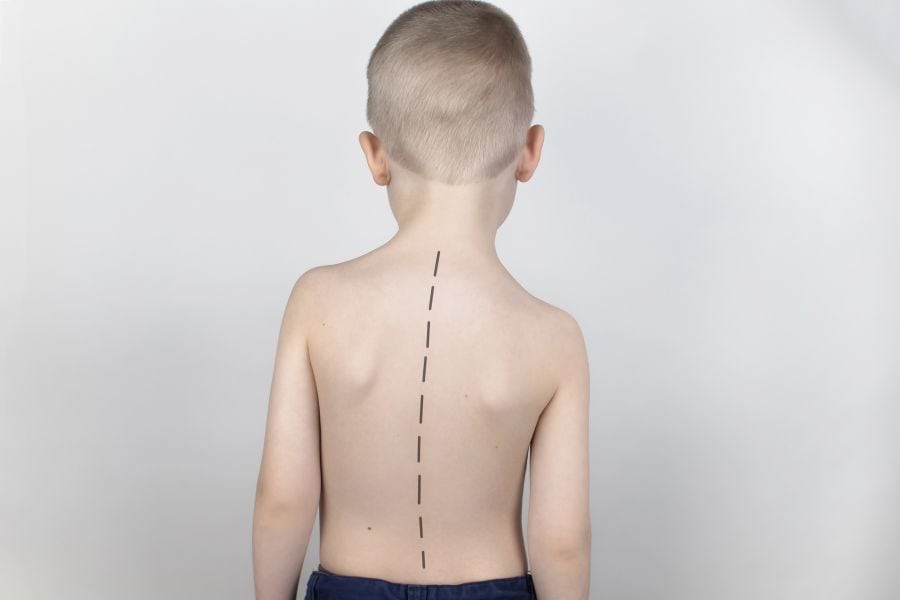
As a parent, you want the best for your child. Do you notice that your child has complaints, is restless, or is developing differently than you expected? Then you may start to wonder whether chiropractic care could help. At the same time, it’s important to know: chiropractic care is not always necessary, and certainly not always appropriate.
Here you can read when chiropractic care for children may be helpful — and when it’s better not to.
First of all: chiropractic care for children is different from that for adults
Chiropractic care for children:
- is gentle and subtle
- uses no force
- often consists of observing, testing, and light corrections
- is always tailored to age and development
The goal is not to treat just for the sake of treating, but to see whether your child’s body can move freely and symmetrically.
When can chiropractic care be helpful for children?
Chiropractic care can be helpful if there are signs that the body or nervous system is not working together optimally. For example, when you notice that:
Movement and posture
- your child has a clear preferred position
- moves differently on the left and right
- often trips or moves clumsily
- has difficulty sitting, turning, or with coordination
Sensory processing and calm
- your child becomes overstimulated quickly
- sleeps poorly or has trouble settling down
- has difficulty concentrating or staying focused
Development after an event
- the birth was difficult, long, or, on the contrary, very fast
- there has been a fall or an accident
- your child develops complaints after a growth spurt
In situations like these, it can be helpful to havean assessment to see whether there are movement or tension restrictions that are putting strain on the body.
Important: this is not about “putting a label on a diagnosis”, but about understanding what the body needs.
When is chiropractic care not useful?
Chiropractic care is not a substitute for medical care and is not meant for everything. It is usually not appropriate when:
Medical urgency comes first
- in acute illness
- with a fever without a clear cause
- in infections or inflammation
- in serious congenital conditions
In these cases, a doctor or specialist should always take a look first.
There are no physical signs
- if there are no movement, posture, or tension problems
- if concerns mainly come from comparing with other children
Every child develops at their own pace. Being different is not automatically a problem.
Expectations don’t match
- if you hope chiropractic care will “solve” behaviour
- or directly change learning difficulties without a physical cause
A good chiropractor will also state this honestly.
When is an assessment valuable, even without treatment?
Sometimes it already feels good to:
- get confirmation that everything is going well
- be reassured
- gain insight into what is normal for your child
An assessment doesnot automatically mean treatment.
What can you expect from a careful chiropractor?
You can expect that:
- your story will be listened to carefully
- you will receive clear explanations
- treatment will only be provided if it is both appropriate and safe
- you will be referred on if something falls outside the scope of chiropractic care
Unsure? Then “having a quick look” is often enough.
In summary
- Chiropractic care can be helpful for movement, posture, or tension-related issues
- Always gentle, age-appropriate, and careful
- Not intended for acute illness or medical emergencies
- Not a solution for everything
You don’t have to choose between “doing something” or “doing nothing”.
Sometimes understanding what’s going on is the most important step.
Do you have questions, or are you unsure whether chiropractic care is right for your child?
Then an open, honest conversation is often the best place to start.