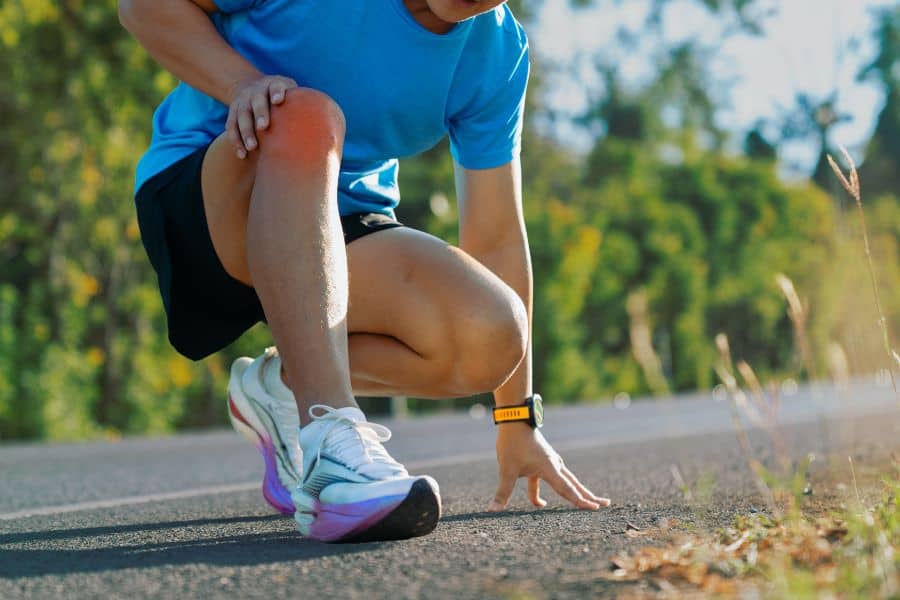
Knee problems are one of the most common injuries among runners. Sometimes they come on suddenly, but more often they creep in. First you feel some stiffness after running, then pain during training, and eventually symptoms that force you to take rest. Still, the knee is rarely the real problem.
Why the knee so often causes symptoms
The knee sits between two major sources of force: the hip and the ankle. While running, with every step the knee absorbs several times your body weight. If movement or load somewhere in the chain isn’t right, sooner or later the knee will pay the price.
That’s why the knee is often the victim, not the cause.
Common causes of knee problems when running
Knee problems usually arise from a combination of factors, such as:
- building up training intensity or distance too quickly
- insufficient recovery time
- reduced hip stability
- limited mobility of the ankle or upper back
- impaired running technique
- asymmetry in the body
Even small deviations can have a big impact when repeated thousands of times per training session.
Well-known knee problems in runners
Runners often recognize symptoms such as:
- pain around or under the kneecap
- pain on the outside of the knee (runner’s knee)
- dull, aching pain after running
- stiffness when getting up or climbing stairs
- a pulling or burning sensation
Symptoms usually get worse with load and sometimes temporarily ease with rest.
Why rest alone is often not enough
Rest can reduce pain, but rarely addresses the cause. As soon as you start running again, the symptoms often return. That’s because:
- movement restrictions remain
- muscle control does not improve
- compensation patterns are not corrected
Without restoring function, the knee remains vulnerable.
The role of the hips, pelvis and spine
The position and movement of the pelvis and spine influence how you run. A functional issue in these areas can lead to:
- excessive strain on one knee
- uneven stride length
- increased muscle tension
- reduced shock absorption
The knee has to absorb this and therefore becomes overloaded more quickly.
What can chiropractic care mean for knee complaints?
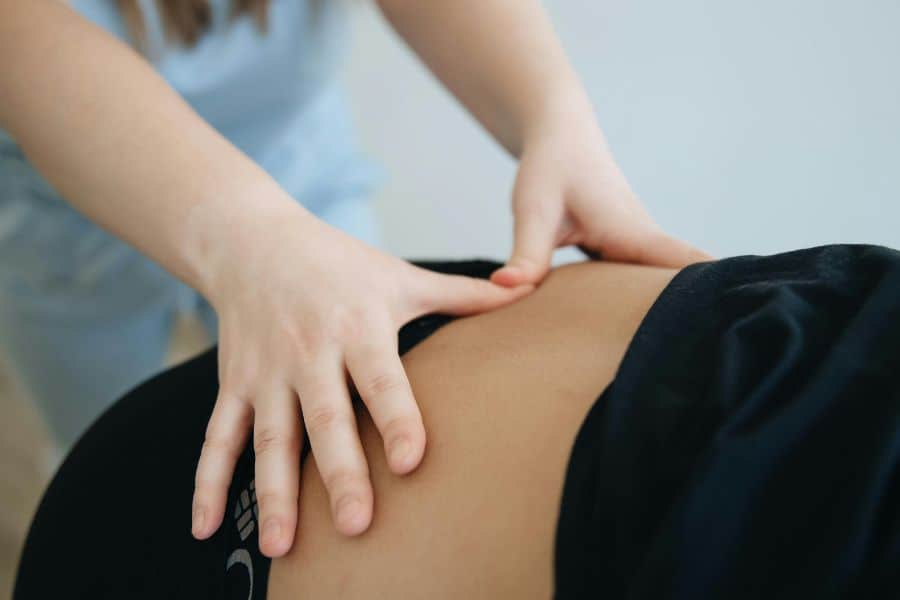
With a chiropractic approach, we don’t just look at the knee, but at the overall movement pattern. Among other things, we examine:
- how the spine and pelvis move
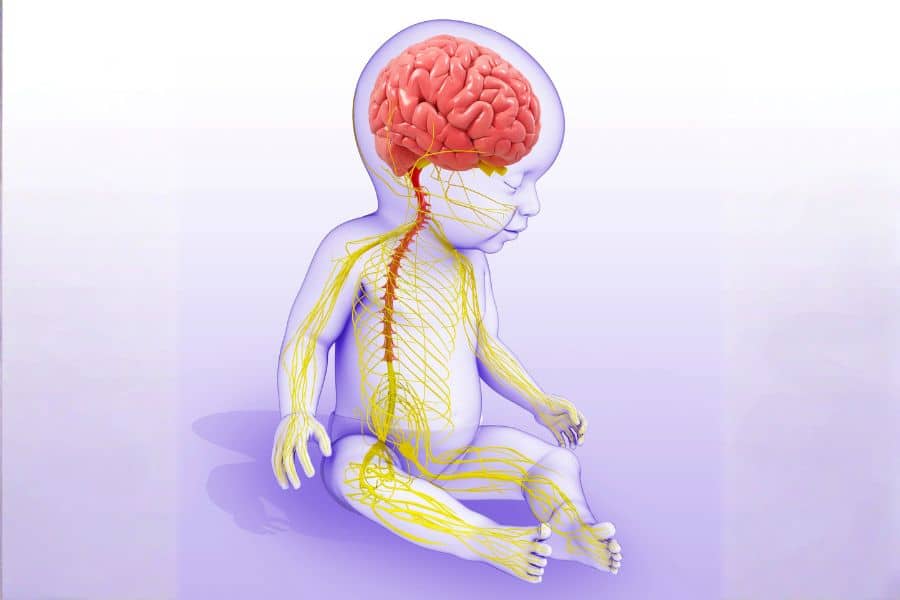
- whether nerve signals are being transmitted properly
- how the hip, knee, and ankle work together
- where compensations arise
By improving these functions, the load can be distributed more evenly again, giving the knee a chance to recover.
Knee complaints are often a signal
Knee pain while running is rarely a coincidence. It’s often a sign that something elsewhere in the body isn’t functioning optimally. By looking beyond the knee itself, you can prevent complaints from coming back and keep running with more confidence.
Questions or want to book an appointment?
Do knee complaints keep coming back during or after running?
At Chiropractie Blaauw we look for the underlying cause behind the complaint.
Feel free to contact us via email or call 0182 – 570124.