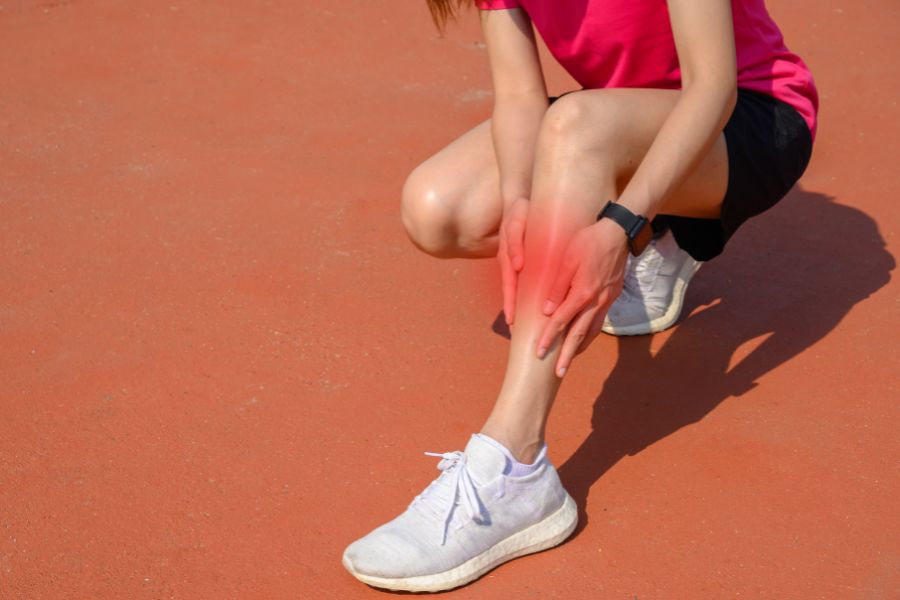
Shin splints are notorious among runners and athletes who do a lot of jumping or running. The pain is felt at the front or inner side of the shin and often starts off seeming harmless. Still, the problem can develop into a persistent complaint that makes training impossible.
What are shin splints?
Shin splints is a collective term for pain complaints in the shin, usually caused by overuse of muscles, tendons, and the periosteum around the lower leg. The pain occurs because these structures repeatedly get too little recovery time between loads.
The complaint is most common in:
- running
- football and hockey
- cross-training
- jumping and sprinting
How do shin splints develop?
Shin splints are rarely caused by one wrong step. Usually, it’s a build-up of factors, such as:
- building up training too quickly
- training on hard or changing surfaces
- fatigue of the lower-leg muscles
- limited ankle mobility
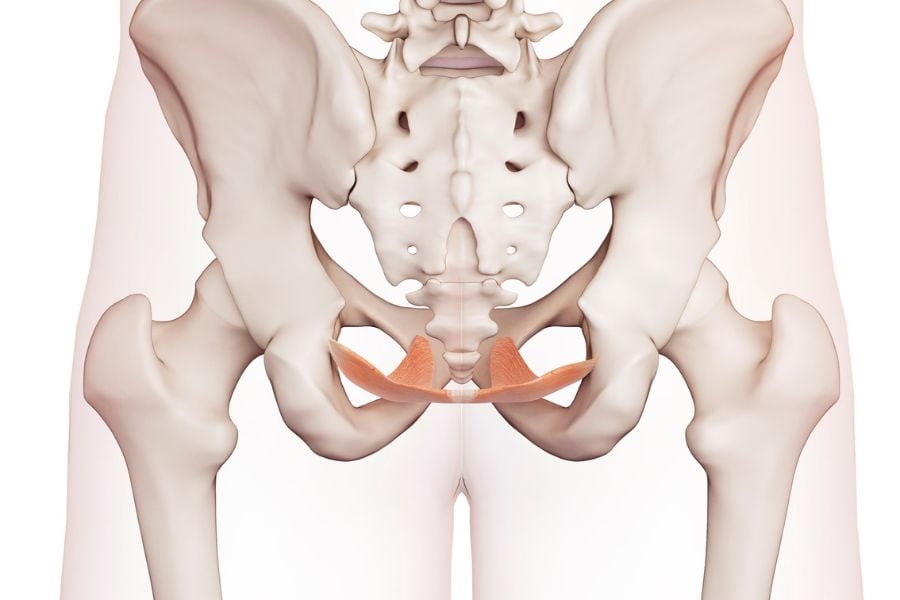
- reduced hip or pelvic stability
- asymmetry in the body
The lower leg then keeps absorbing the same forces, while the body can’t distribute that load properly.
Typical symptoms of shin splints
Many athletes recognize:
- a nagging or stabbing pain along the shin
- pain that increases during exercise
- tenderness to touch
- stiffness when starting training
- symptoms that temporarily ease with rest, but quickly return
At first, the pain often disappears after exercise; later it may also be present at rest.
Why rest is often not enough
Rest helps reduce the pain, but it usually doesn’t address the cause. As soon as you start training again, the symptoms often come back. That’s because:
- the movement chain is not restored
- compensation patterns remain
- muscle control does not improve
Without a change in how the body moves, the shinbone remains overloaded.
The role of the ankle, knee, hip, and spine
The shinbone does not work in isolation. The way your foot lands, how your knee moves, and how stable your pelvis is determine how much load the lower leg takes. A functional problem in:
- the ankle
- the knee
- the hip
- or the spine
can cause forces not to be absorbed properly and to build up in the shinbone.
What can chiropractic care mean for shin splints?
With a chiropractic approach, we look beyond the painful area. We assess, among other things:
- how the pelvis and spine move
- whether nerve signals are being transmitted properly
- how the hip, knee, and ankle work together
- where compensation patterns develop
By improving these functions, load can be distributed more effectively and the lower leg gets the chance to recover sustainably.
Shin splints are a warning sign
Shin splints are not a coincidence, nor are they “normal” sports pain. They are a sign that the body is becoming overloaded somewhere. By addressing the cause instead of only the pain, you prevent symptoms from continually coming back.
Questions or want to make an appointment?
Do shin splints keep coming back or are they getting in the way of your sport?
At Chiropractie Blaauw we look at the underlying cause of the complaint.
Feel free to get in touch via email or call 0182 – 570124.