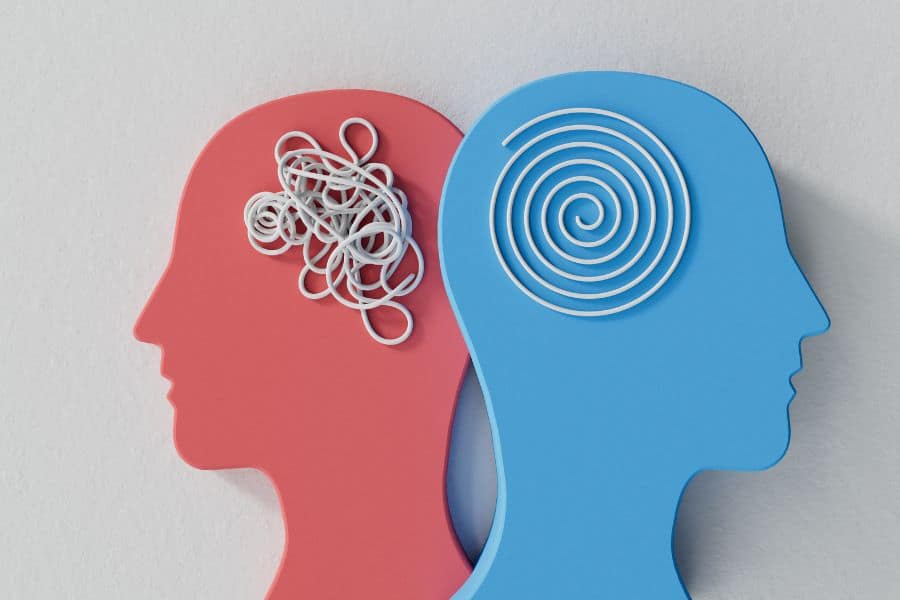
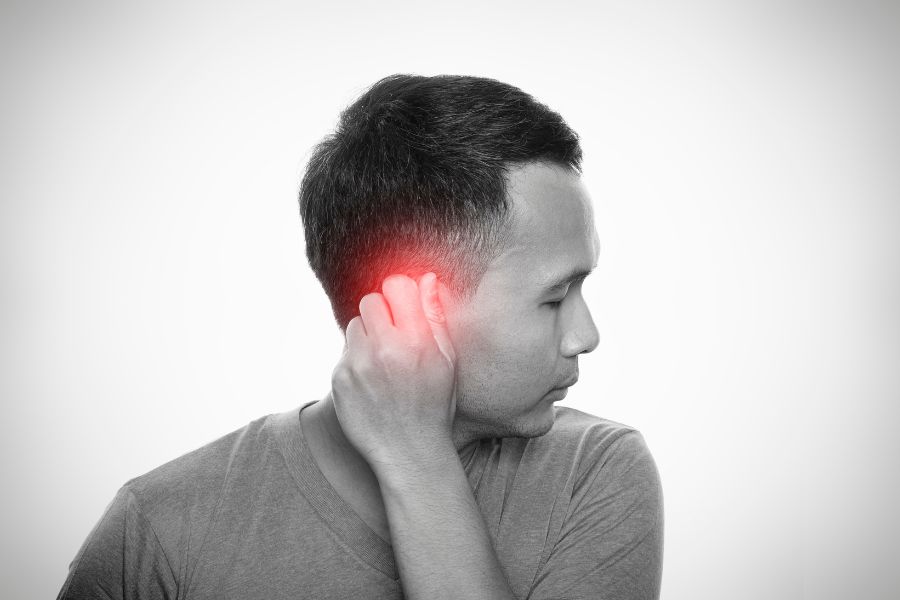
Humans are built to move upright. To keep that posture stable, the body has a sophisticated balance system. When this system doesn’t work well together, you may experience symptoms such as dizziness, instability, or an uneasy feeling when moving.
You may recognise the difference: one person can ride a rollercoaster ten times without any trouble, while another feels nauseous after just one ride. Or someone walks effortlessly along a balance beam, while another can barely stay standing because of dizziness. In all of these situations, the balance system plays a central role.
How does the balance system work?
The balance system consists of three parts that work together. Only when these systems are well aligned does movement feel stable and natural.
The balance organ (in the inner ear)
The balance organ lies deep within the skull, in the left and right temporal bone, together with the hearing organ. This organ detects movements of the head and consists of two parts:
Otolith organs:
These detect linear movements, such as:
- up and down (for example in a lift)
- forwards and backwards
- sideways
When the head moves, tiny sensory cells bend and send signals to the brain about direction and speed.
Semicircular canals:
These detect rotational movements of the head. They are filled with a thick fluid that lags behind slightly when you turn. This causes sensory cells to bend again, signalling to the brain which rotation is being made.
Thanks to this system, even with your eyes closed you know whether you are turning left or right.
The eyes
The eyes continuously provide information about your surroundings. They help keep the image stable on the retina, even when your head moves.
That’s why your eyes automatically move along with head movements. For example, if you tilt your head, your eyes subtly rotate the other way to keep the image level. This information is constantly compared with signals from the balance organ.
When this coordination is disrupted, it can lead to dizziness or a wobbly feeling.
Muscle and tendon sense (proprioception)
In muscles and tendons there are sensors that provide information about:
- muscle length
- muscle tension
- joint position
This is called proprioception. Thanks to this information, you know where your body is in space without having to look. This system plays an important role in posture, balance, and coordination.
What goes wrong with a balance disorder?
All information from these three systems is continuously compared, especially in the cerebellum. When a disruption occurs anywhere in this process, the information no longer matches up.
This can result in:
- dizziness
- instability
- a sensation of ‘floating’ or ‘sinking away’
- difficulty walking or turning
- nausea
The body often tries to compensate by holding the head or body differently, which can actually make symptoms worse.
Dizziness and balance: why symptoms can vary so much
Not everyone responds the same way to a disruption in the balance system. Training, experience, and overall fitness play a major role. Someone who trains a lot, such as a gymnast, often has a very well-tuned balance system.
When the cooperation between the balance organ, the eyes, and the body is disrupted, symptoms arise.
Treatment for dizziness and balance disorders
At Chiropractie Blaauw, we look at the functioning of the entire balance system. Not only the inner ear, but also the spine, nervous system, eye movements, and sense of posture are taken into account.
Treatment focuses on:
- restoring cooperation between the systems
- improving the processing of stimuli
- reducing compensatory behavior
- increasing stability and confidence in movement
Everything is tailored to your symptoms and what your body can handle.
Make an appointment for dizziness symptoms
Are you experiencing dizziness, instability, or disturbed balance and would you like to know what’s going on?
You can easily make an appointment for a thorough assessment and personal advice.
Questions about dizziness or balance disorders?
Feel free to get in touch via email or call 0182 – 570124.