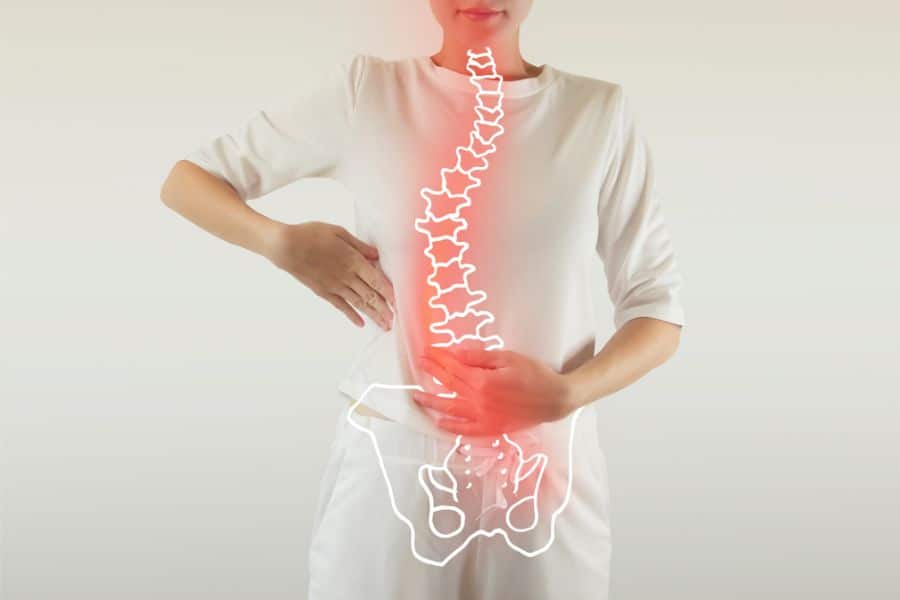
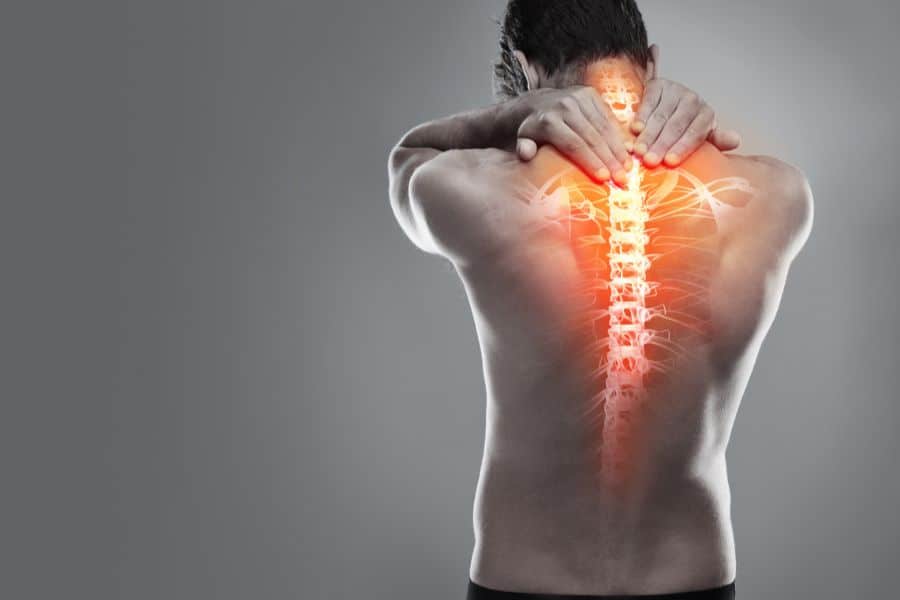
Upper back pain usually develops gradually. It is often caused by a long-term poor posture, repeated one-sided use of the arms, or doing a lot of work above shoulder height. In some cases, the pain starts suddenly, for example from lifting something incorrectly or making an awkward movement.
In everyday life, the upper back is often unknowingly overloaded, especially with sedentary work or prolonged forward-bent postures.
The role of posture and gravity
The thoracic spine naturally has a slight backward curve, also known as kyphosis. To stay upright, the body has to work continuously against gravity.
In practice, however, you often see that many people start to slump more and more into this curve. The shoulders roll inward and the head moves further forward. This results in a forward-bent posture.
The muscles of the upper back try to correct this posture, but are often not built for this. The result is overload, muscle tension, and eventually pain.
What happens with upper back pain?
Upper back pain often develops due to a functional impairment of the thoracic vertebrae and/or the ribs. This puts extra strain on the surrounding muscles and can irritate the vertebral joints.
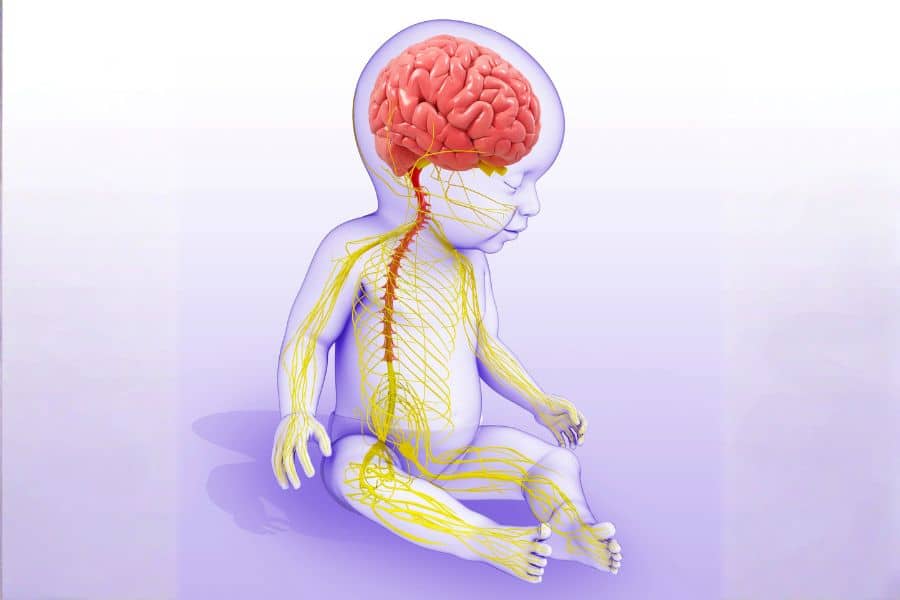
As a result, nearby nerves can also become overstimulated. This can cause:
- a dull or sharp pain in the upper back
- muscle cramping in the chest and upper back
- a tight or constricted feeling
Radiation to other areas
Nerve irritation in the upper back can cause pain that radiates to other parts of the body. For example, the pain may be felt:
- in the chest
- in the neck
- in the shoulders or arms
- towards the head
Coughing, sneezing, or taking a deep breath can also be painful. The symptoms can sometimes resemble heart-related complaints, which can understandably be worrying. With a careful examination, it can be assessed whether the symptoms are related to the upper back.
Treatment for upper back pain
Do you suffer from upper back pain and want to know what is causing it? Our chiropractors focus on restoring the movement function of the thoracic spine and the ribs.
By reducing functional impairments and overload, pain, muscle tension, and radiating symptoms can decrease. Treatment is always tailored to your personal situation and capacity.
Make an appointment
Would you like to have your upper back symptoms assessed?
You can easily make an appointment at the clinic for a thorough examination and personal advice.
Questions about the treatment? Feel free to get in touch via the contact form or call 0182 – 570124.