After an injury, you mainly expect pain, stiffness, or loss of strength. Yet many people notice something else: the feeling that they are less stable. As if you lose your balance more easily, move less confidently, or have less trust in your body. Poor balance after an injury is more common than you think—and it doesn’t always go away on its own.
Balance is more than “standing upright”
Balance is regulated by cooperation between:
- the vestibular system
- vision
- muscle and joint sense (proprioception)
- the nervous system
With every movement, the body compares this information to determine how you should correct. After an injury, this system is often disrupted.
What happens after an injury
With an injury—for example to the ankle, knee, or back—more changes than just the damaged tissue. Often, the following occur:
- reduced mobility
- loss of fine motor control
- reduced signal transmission to the brain
- insecurity when moving
Even when the pain decreases, balance control often lags behind.
Why poor balance persists
A lot of recovery focuses on:
- pain reduction
- building strength
- rest and gradually increasing load
What is often forgotten is restoring coordination and timing. As a result:
- the body reacts more slowly
- it corrects less accurately
- compensations develop
This increases the risk of new injuries or overload.
The role of the nervous system
After an injury, the nervous system receives different signals from muscles and joints. This information is:
- less accurate
- delayed
- sometimes asymmetrical
As a result, the body is less able to sense where it is in space. The result: wobbly movement, feeling unsteady when standing, or difficulty making quick changes of direction.
Symptoms that often go hand in hand with poor balance
People with balance problems after an injury often experience:
- feeling unsteady when walking or doing sports
- tripping more easily
- fatigue when standing
- muscle tension
- recurring minor injuries
These symptoms are often underestimated, but they are important signals.
Why exercises alone are sometimes not enough
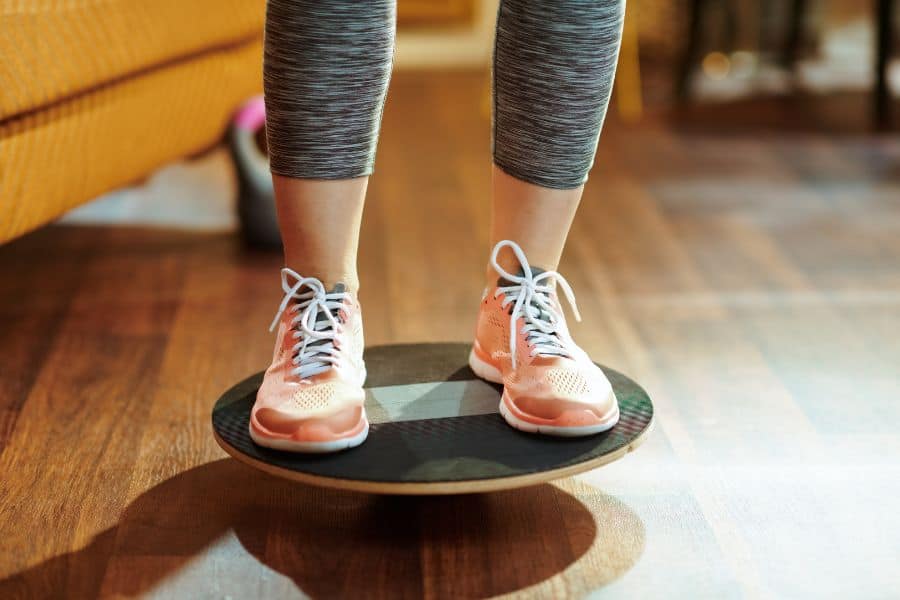
Balance exercises are valuable, but they don’t always fully solve the problem. If:
- joints don’t move properly
- nerve signals are disrupted
- compensations persist
then the body will continue to have difficulty moving steadily, despite training.
What can chiropractic care mean for balance problems?
With a chiropractic approach, we look at the whole system. This includes examining:
- how the spine and joints move
- whether nerve signals are being transmitted properly
- how the left and right side work together
- where imbalances have developed
By restoring these functions, the body can respond more accurately and more steadily again.
Balance doesn’t always recover on its own
Poor balance after an injury is not a coincidence, and it’s not “all in your head.” It’s a sign that the body has not fully recovered yet. By looking beyond pain and strength, you can prevent new complaints and increase confidence in your body.
Questions or want to make an appointment?
Have you noticed your balance isn’t what it used to be after an injury?
At Chiropractie Blaauw we look at the cause behind the problem.
Feel free to get in touch via email or call 0182 – 570124.