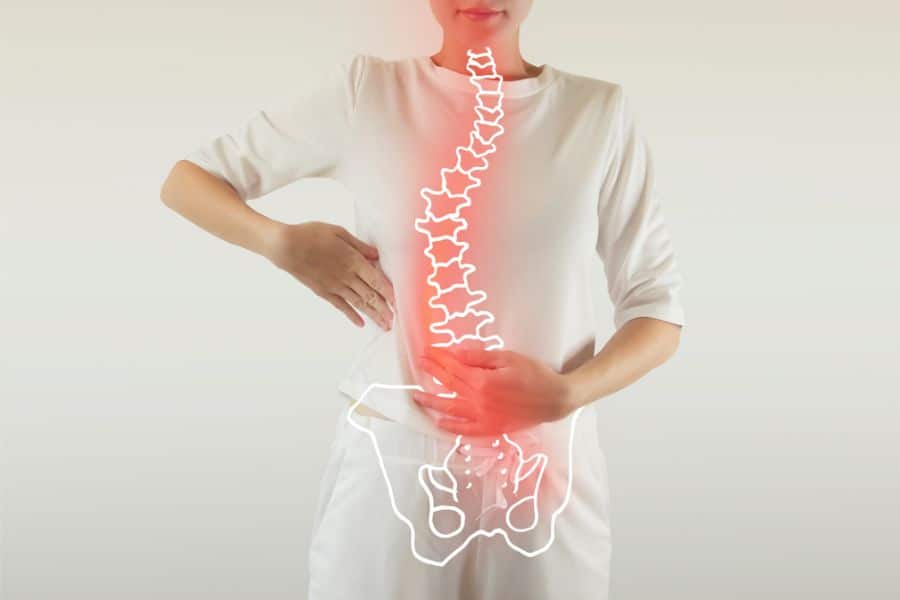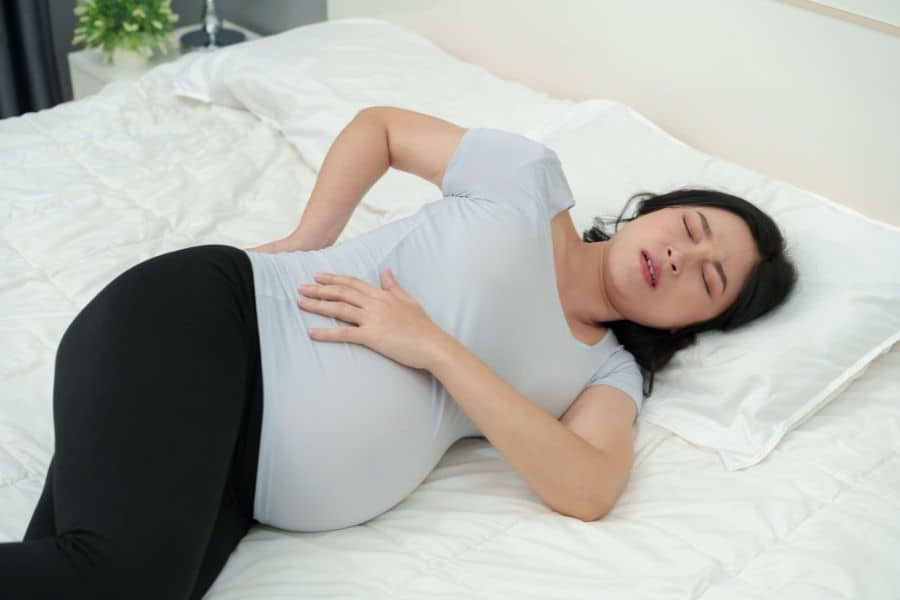
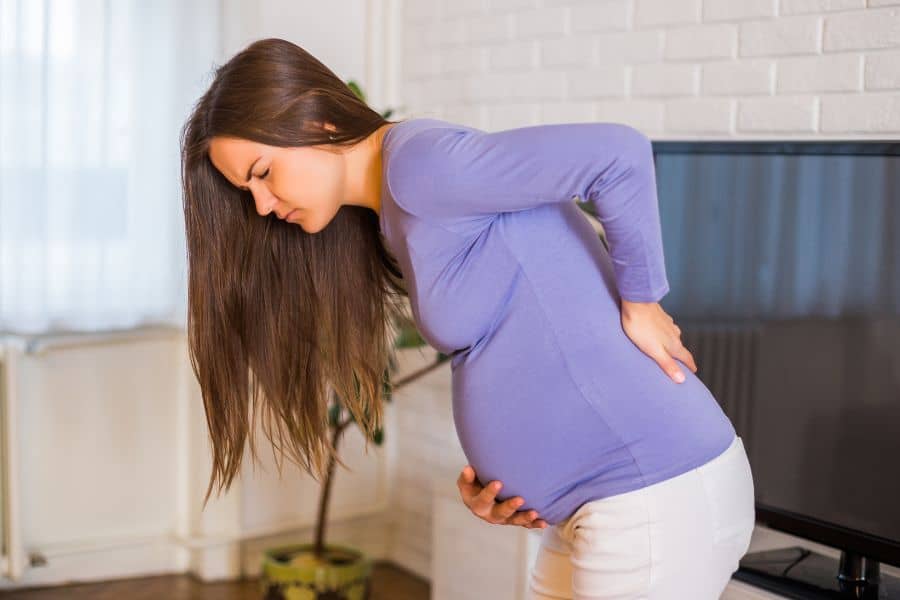
Back pain during pregnancy is very common. Especially the lower back and the pelvis are often under strain. This is related to changes in hormone levels, an increase in body weight, and a change in posture.
During pregnancy, it is especially important for the body to function as well as possible. Particularly in the first weeks, when the baby is growing rapidly, the load on the mother’s body already changes significantly.
When back pain is mild and only starts in the last two to three months, treatment is usually not necessary. However, if the symptoms become severe early in pregnancy or interfere with daily activities, there may be a disruption in how the spine or pelvis is functioning. In that case, treatment may be beneficial.
How does back pain arise during pregnancy?
In the first trimester the baby is well protected by the pelvis, the amniotic fluid, and the membranes. At the same time, hormone levels change, making ligaments, tendons, and muscles more flexible. This is a natural preparation for the baby’s growth and for childbirth.
As the pregnancy progresses:
- the baby grows
- the available space decreases
- posture and the center of gravity change
This increases the load on the spine and pelvis. Lower back pain, in particular, is common in this phase.
Symptoms that may occur
The changed mobility of the pelvis can show up in different ways, such as:
- pain around the tailbone
- pain in the hollow of the lower back
- pain at the front near the pubic bone
- radiating pain into the leg
Many of the ligaments that support the growing baby attach to the pelvis and the spine. When these areas are not functioning optimally, uneven tension can develop. This can not only cause symptoms for the mother, but also affect the amount of space available in the uterus.
Chiropractic care for back pain during pregnancy
Chiropractic care can help improve the function of the lower back and pelvis during pregnancy. Treatment focuses on:
- optimising mobility of the pelvis
- reducing overload
- creating as much space as possible in the abdominal cavity
- preparing the body for childbirth
The techniques are always adapted to pregnancy and are safe and carefully applied.
Even when there are few or no symptoms, care can be supportive. By improving the function of the spine and pelvis, treating ligaments and muscles, and receiving targeted advice and exercises, you can prepare yourself both physically and mentally for childbirth.
When is treatment possible?
Treatment is possible in all stages of pregnancy, even up to the due date. Special, adapted techniques are used to ensure treatment remains safe, even in the later stages of pregnancy.
During treatment, we look at:
- the function of the spine
- the position and mobility of the pelvis
- any other joints that may be involved
In addition, you may be given exercises that help support the most comfortable pregnancy possible.
Pelvic instability during or after pregnancy
Pelvic instability during or after pregnancy is also known as symphysiolysis . This causes pain around the pelvic joints and the pubic bone. Due to hormonal changes, the ligaments weaken, making the pelvis less stable.
Too much mobility can mean the pelvis is less able to support body weight. This can cause pain when walking, standing, turning in bed, or climbing stairs.
Stabilising chiropractic adjustments can help to:
- improve pelvic stability
- reduce symptoms
- support recovery
In addition, a pelvic support belt may be recommended for extra support.
Make an appointment for back pain during pregnancy
Are you experiencing back or pelvic symptoms during pregnancy and would you like to know what may be possible in your situation?
You are welcome for a thorough assessment and personal advice.
Feel free to get in touch via the contact form or call 0182 – 570124.